Excel is a good tool. Most Indian businesses start with it and that is fine.
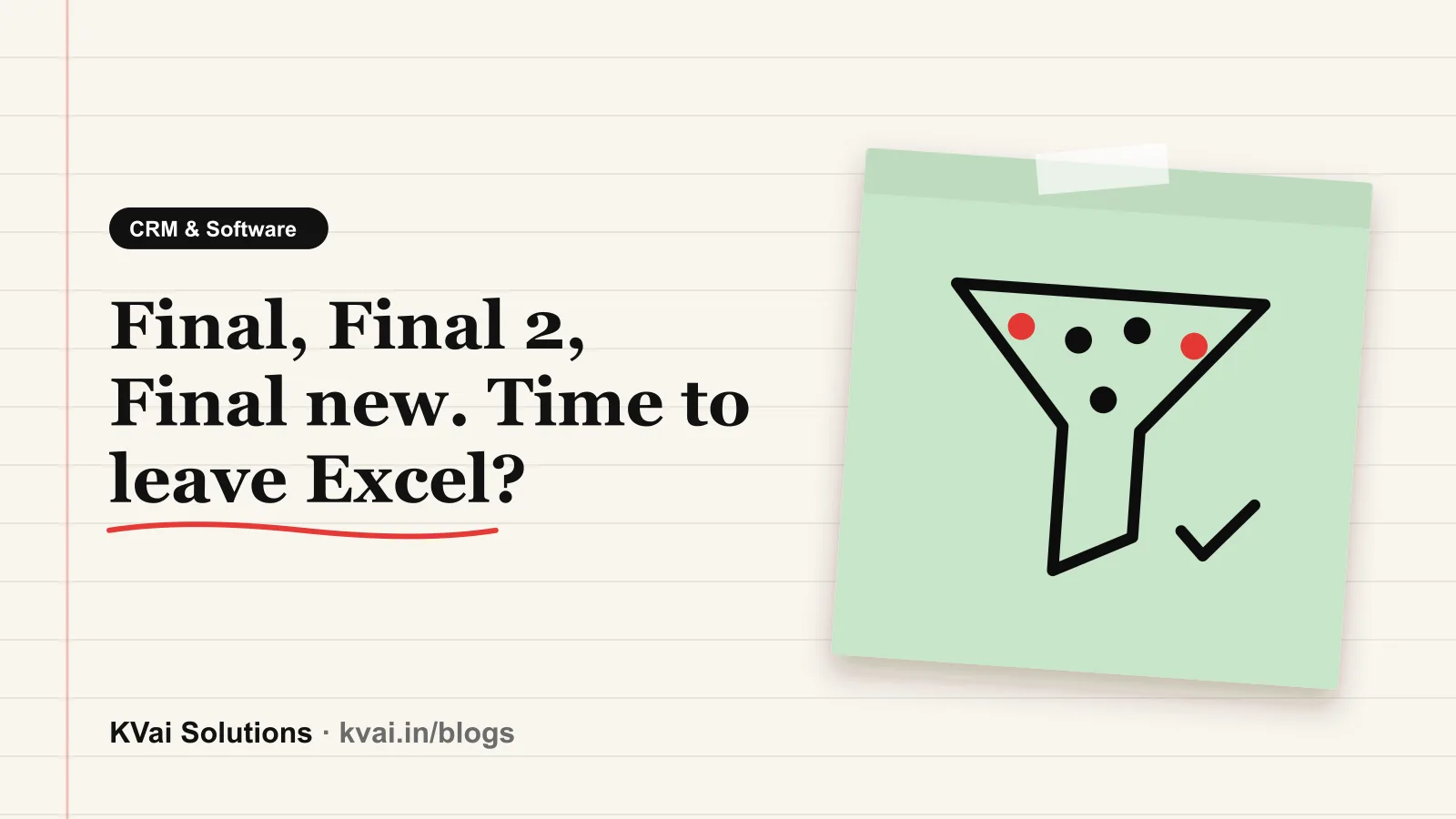
The trouble starts slowly. One sheet for stock. One for orders. One for purchase. One for payments. Then a copy of each with a new name. Final. Final 2. Final new.
Then one day the sheet says forty boxes are in the godown. The godown has twelve.
Nobody did it on purpose. Someone typed in the old copy. Someone forgot to enter a return. Someone deleted a row by mistake and nobody noticed.
There is also one person in every such business who knows the file. When that person is on leave the work slows down. When that person leaves the company the file becomes a puzzle.
This is the time to think about ERP. Not because Excel is bad. Because your business has grown bigger than a set of sheets.
Signs you need ERP now
- You keep more than one sheet for the same thing. Two people keep two versions. Nobody knows which one is right.
- Stock in the sheet does not match the godown. You find out only when a customer is waiting for the order.
- Only one person understands the file. Your business should not depend on one person's memory.
- Month end takes days of matching. Sales, purchase and payments are checked by hand before the CA can even start.
- You cannot answer a simple question fast. How much is pending from this dealer? It should take a few seconds. Today it takes an hour of searching.
Mistakes to avoid
- Moving to ERP and keeping the old sheets running for months
- Buying ERP before writing down how your work moves today
- Putting every feature in on day one. Start with stock, sales and purchase
- Leaving out the one person who knows the old file. They should help plan the new one
ERP is not a magic box. It is one system where stock, sales, purchase and accounts sit together. When a sale is made the stock goes down on its own. When goods come in the stock goes up. Everyone sees the same number.
Many ready-made ERP products are made for very big companies. A small manufacturer in Ludhiana or a distributor in Rajkot does not need all of that. An ERP built around your own way of working is often easier for the staff to learn.
What to do in the next 7 days
- Day 1: Count how many Excel files your business uses every week.
- Day 2: Note which numbers are kept in more than one file.
- Day 3: Ask your staff where they lose the most time each month.
- Day 4 to 7: Write one page on how an order moves from enquiry to payment. This is the base for any ERP.
We build ERP that fits how your business already works. Tell us what is in your sheets today. Message us on WhatsApp
How many Excel sheets does your business run on today? Be honest. Tell us in the comments.
Keep reading
Orders on WhatsApp. Stock in a notebook. Bills in Excel.
Many shops and small factories run like this. Orders come on WhatsApp. Stock is written in a notebook. Bills are made in Excel. Payments are checked in the…
Read article
One shared password for the whole office?
In many offices one login is shared by everyone. The billing software has one username. The password is written on a paper near the computer. Or it is the…
Read article
GST bills without typing the same thing twice
Look at how many businesses make a GST bill today. The order is written on paper or in a chat. Then someone types it into Excel to make the bill. Then the…
Read article